Europe, A History
:history:
- Need to do more research on the 30 years war
- With the start of colonialism there is also the begin of diplomacy in Europe and
-
the Balance of Power - a doctrine which viewed any change in one part of Europe as a potential threat to the whole. p.582
- Territories used like casino chips
-
- ”There is a dynamism about 19th century Europe that far exceeds anything previously known. … Raw power appeared to be made a virtue in itself” p.759
- Republics were out of fashion at the beginning of the 19th century
- By 1900 Germany combined a major stake in the industry and commerce of the West with a dominant role in the economics of the East.
- On modernizing and the industrial revolution: “The concept of class based on flexible economic criteria was strongly opposed to the older groupings based on birth and legal privilege, and was a central feature of modern society.”
- Really good sweeping narrative on the effects of modernisation. The awakening of political consciousness is a big one, where peasant could now have views and opinions on things. Similar to what will happen with Africa and India in the future as they get better access to the modern world
- Neo classicism is a reaction to romanticism. Early 19th century art tends to have this style.
Revision (or bits I’m shaky on)
- Trying to get a grounding on the different phases of development
- The end goal would be some sort of dynamic map
- Useful
- Highlight large trends (e.g. what are the main characteristics of the time, what makes this time unique, why can we split it from the other time periods)
- Look at map for the time period
- Look at the sources (further reading possibly)
The Geography of Europe
How do we bring the continent to life
- European plain (from the Atlantic to the Urals)
-
On the average, the main east-west gradient falls by 6k ft over almost 3,000 miles
- I don’t think theres really any flat plain
- The idea of cultural gradient running counter to the physical gradient
- While there was a gradient from east to west the elevation of the mountains in the western plane far exceeded the eastern peaks.
- The presence of these mountains added special significance to the gaps
- The Midi (South France) offered the only painless passage to the northern plain
- The Danube marks a east west passage to the European plain. It was the main frontier line for the Roman empire. Its basin is nested in the shadow of the Carpathians
- Volga “fills the corridor betwen the Baltic and the Caspian”
- Huge amount of coastline, access to large portions from different angles. Unlike the US for example
Resources
- Interesting vid about chokepoints and straits in Europe and general geography
- Problem with being landlocked is that your country can’t control the same trade opportunities as those with access to the sea.
- Geographical maps of Europe
The Birth Of Europe
Timeline (AD): c.330 - 800
At the death of the ‘known world’ into two simple parts, the Roman and the barbarian, generally still stood.
- Start of the decline of the Roman empire. And the entrance of this kind of barbarian hinterland.
- There was also a growing rift between the western and eastern halfs of the roman worlds
- Export of chrisitanity to pagan peoples
- Rise of Islam in the 7th century
- The causes of migrations can be complex environmental reasons (political inc.)
- Volkerwanderung, the ‘Wandering of Peoples’. Engulfed the continent (not just a barbarian invasion). It continued throughout the first millenium until all the wanderers had found a permanent abode.
- 3 main types of people at this time: settled (inhabitants of the Empire), pastoral farming or primitive arable land
(barbarian tribes) and then, true nomads. Sea raiders could also be included.
- Davies makes a point here that agriculture was reaching a point where there was more use tilling the land (on the same patch) than constantly moving on. Sense of wanting to find a home or stationary secure place.
- The discussion about what apart from language Indo Europeans have in common seems slightly unfinished on p.220. An interesting point though: “to protect its [the tribe or grouping of people] sense of identity, it will often erect formal or informal barriers against interbreeding… membership is defined by criteria of kinship backed by religious taboos… In this way, language and kinship do become intertwined”
- The first large populace to expand outside the empire were the Celts (possibly due to their metal working?). They occupied the whole of the land west and north of the alps.
- Celtic fringe started to develop in the British Isles under pressure from Germanic tribes
- Slavic peoples history is less well documented as they had less contact with the Empire.
- Baltic people p.227
- First sign of the ‘deluge’ is 376 when the Ostrogoths asked Emperor Valens if they could settle in Moesia (North balkans). Two years later they fought.
- The Visigoths followed with there leader Alaric, going on a rampage sacking Athens and Rome after the Empire refused there petition to settle in Noricum (North west of Moesia). Later settled in Spain (?)
- When the legions of Gaul were withdrawn to try and protect Rome from the Visigoths the garrison of the Rhine was
thinned, the Burgundians moved into this area between the Rhine and Main in about 400.
- They were pushed back by the Empire and eventually settled near Lyon in the valleys of the Rhone and Saone controlling the principal Alpine passes. (the Midi?). The two rivers seem to connect at Lyon.
- In 406 hordes of barbarians (vandals, suevi and alans) crossed the Rhine near Koblenz and poured into Gaul (slightly larger area around modern France). 409 the Pyrenees, 429 the straits of Gibraltar and the 439 Gates of Carthage
- They took to the sea from Cathage and took the likes of Sardinia. 2500 miles in 33 years!
- The Suevi created a kingdom in the far north west (gallicia) and the Alans went for the valley of the Tagus (river running through Spain and Portugal, below Gallacia)
- The legions left Britain and Anglo Saxons and Angles started to fight over different portions
- After the Huns in Pannonia the Ostrogoths launched a campaign of rapine (violent seizure of property) in Eastern Empire. Led by Theodoric they fought with the Dalmatia.
- Using status as a Roman foreign state (foederatus) Clovis (c.466) was able to multiply his dominions in much disputed Gaul. Starting from the Border between modern Belgium and France he defeted several tribes down towards the Pyrenees defeating the Burgundians around the Midi and thee Visigoths of Aquitaine in 507. Clovis took a Christain wife and was baptized
- The Visigoths flourished in Spain (unlike its predecessor in Gaul), It absorbed the Suevian realm
- The Otrogothic kingdom was taken over by the Lombards (Long Beards) Who had spent century after the fall of the huns (around 450 - 550 ) mastering the Gepids and Avars beyond the Danube. In 568 they turned south and established a hegemony (leadership or dominance by a social group) centered in Pavia (below modern Milan)
- It was the collapse of the Avars the paved the way for the Slavs (?)
- p.237 how the languages got broken down by the intermingling of these new tribes. Not just Romans and barbarians anymore. In ex roman provinces like Britain Latin was completely wiped out.
Fall of Roman Empire
- The sacking of Rome by Alaric seems to be particulary shocking to the Eastern capital (Fall of Civ podcast). It becomes a city for refuge.
- Davies describes how Rome ‘reels’ from the Barbarian invasions, it doesn’t ‘fall’
- The Eastern Empire had a soft influence on the Western capital from the early 5th century, claimin ownership when It was actually ruled by barbarian kings who they ceded demands to.
Notes
- The roman empire kind of dictates the border for the following migrations. As Davies says it can seem like the light and the hinterland the shade
- Defining the Eurasian steppe, how low is it?
- Was there anyone in Ireland before the Celts? Not in the origin identity (because I doubt there was much of one, but in terms of how long they were there, what the were up to, Neolithic period I think)
- Where is the deviation point to a new culture?
- Davies says that a lot of factors influenced migrations and that the migrations in the far east could like falling dominoes affect the west
- Proto Indo-European can be traced back the Eurasia 5000BC [language](language#Indo European)
- Germanic peoples probably formed the largest barbarian population of the Roman period. First identified in
southern Scandinavia.
- Germanic group divided into three groupings. The Scandinavians, the west germanic around the north sea coast (batavians, Franks , agles, saxons), Eastern germanics, east of the Elbe (Lombards, Alans and Goths). Principal actors in the crisis of the western Empire
- The fall of the Avars?
How do we define different tribes?
- Celts: Shared (similar ) language, religious beliefs, traditions and culture. Started to evolve around
(1200BC, History.com). Romans referred to them as Galli (barbarians) in around 700BC. They controlled much of Europe
north of the alps (also, the British Isles). Julius Caesar then started a military campaign against them in around the
first century BC. Interesting, this campaign is where the Roman’s tried to conquer the British Isles but didn’t so
there was still Celtic influences there.
- Several tribes made up the larger population.
- Germanic: Caesar put forward the first description of these people. From tacitus, The germanic peoples were
separated from the gauls by the Rhine and danube. Useful video
- Emerged as a separate language from Proto Indo European in the Bronze age in certain geographical regions
- Would it be accurate to say that they worshiped the same gods and spoke generally the same language (although they were rarely united as a singular tribe)
- Davies says that they are generally classified into 3 groupings
- Scandinavian group
- West Germanic group (along the North sea coast)
- East Germanic (east of the Elbe)
- Slavs: Western Slavs marched across the plain up the Elbe and Danube. example the Lusatia between modern Poland and Germany
- Slovaks southern slope of the Carpathians, founders of the Moravian empore.
- Czechs take over Bohemia
- The Poles (people of the open plains) first appear in Warta (a tributary of the Oder)
- The eastern slavs moved north and east into Baltic and Finnic territory and the forests of the upper Volga. Created divergences between the Ruthenians and Russians. Davies says that just like the Poles sang of the Vistula the Russians sang of the Volga
- The southern slavs invaded the Empire in the 6th century, they were to slavicize most of mainland Greece, Illyria, Bulgaria, Macedonia
(Possible) Resources
- Medieval Civilization, Le Goff
- Read first chapter again
- Great map on tribes (53BC)
Resources

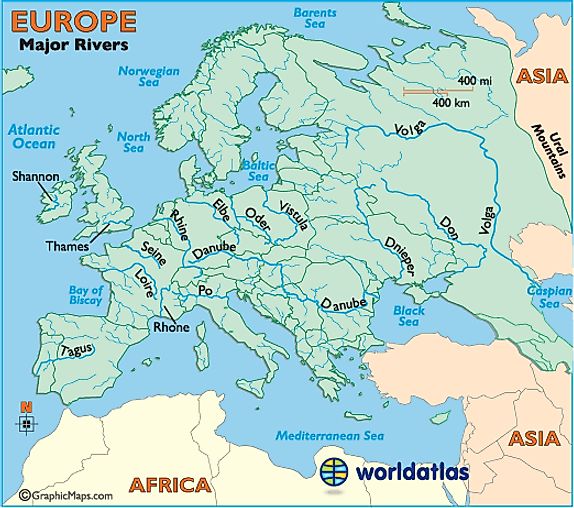
- Just getting to grips with the landscape (literally) at the moment
- Ancient Greece
- Davies starts the chapter with the unique climate of those islands around the Aegean and its unique climate as being a rare occurence in the world. I cant help but think that this is kind of hindsight though.
- The pre historic age begins with the Minoan and Mycenaean civilizations up to about the 1200BC in which the regions around the Aegean entered the dark ages.
- The golden age of the Greek city states was from about 8th century to the 4th century BC. Beginning with the Olympiad and ending with the conquering by the Macedonians
- Theres an interesting point about the victory of Hellas over the Persians in the Persian Wars giving a sense of
identity to the Greeks. The East became the seat of brutality and ignorance. This could be a start of the idea of
Greece full of Liberty, Persian all tyranny that defines Europe as the West and the East as tyranny.
- Interesting Block p.103
- ”The ‘superiority complex’ of the ancient Greeks inevitably raises questions about similar ethnocentric and xenophobic ideas which surface in Europe at later dates. It was certainly adopted by the Romans, and must be held in the reckoning when one considers the various purveyors of ‘Western Civilization’ who, like the Romans, have felt such an affinity for ancient Greece”
- Interesting Block p.103
- The cirty states around the Aegean seemed to lack the resources to support a growing population with not much arable land. Commercial outlets started popping up and bigger city states started creating clones of themselves through colonisation around Sicily and Souther Italy (to connect with Africa and Levant?)
- Sicily and Southern Italy (Magna Graecia or ‘Greater Greece’)
- Greek religion progressed from early animism and fetishism ?. Lots of cults formed to different gods with different rites.
- Greek philosophy grew up in opposition to this. Different schools of moral thought. Cynics, Stoics etc.
- Greek drama evolved out of ceremonies of religious festivals. “The first Athenian dramas were performed at the festival of dionysus”. Davies says that this time inspired the humanist tradition. It was the beginning of argument and rhetoric being studied. As the dramas were treated (or the festival dialogues) as competition.
- This burst of art and science and literature seems to have been re hashed throughout the centuries and is why it plays a major part in European culture.
- Greek city states tried out many different forms of government
- With complicated political structures
- The city of Syracuse and Archimedes involvement in the Punic wars marks the end of the flourishing of thought
- Theres also an interesting Block here that talks about agricultural damage being noticed as early as the 6th century BC. The ‘first transistion’ the adoption of agriculuture. Europe being kind of late to the party but “The Judaeo-Chirstian tradition, which was destined to triumph in Europe, derived from the era of the ‘First Transition’. It stressed Man’s supremacy over the rest of Creation.”
- Need to make these shorter.
- Rome
- Rome starts kicking off around 750BC and there origin story involves the taking of women from a nearby city.
- The Roman empire was absolutely massive. Davies talks about the 3 stages. The Kingdom, The republic and the Empire
- On thing I note is the idea of glorification of oppressive states. We admire ancient Rome because of its ability to maintain such a vast amount of people which and in some cases because of methods that were a result of oppression. One thing that comes to mind is the games and gladiatorial fights. Admiring the Coliseum ignoring what it was used for.
- The republic begins with the consuls and its the movement from a province, to conquering the mediterranean. I like the info about the dating that they used which became by consulship.
- I noted also about researching more on the Punic Wars as it really seems to have signified a lot of the character of the people of Rome
- Of course there was lots of civil strife. Theres a weird hierarchy too. You could be an un-free citizen . Davies
notes that class conflict was few and far between. The blood line kinship and father hood ruled strong and were
the cornerstone of family law.
- The plebians met in there own forum and so did the patricians and then sometimes they would meet with eachother. Party politics starts here too as the patrons expected followers to support his policies.
- I noted here the interesting info about the Roman naming. Mainly used as a way to denote social status about anything else (individual sense). Which is interesting to think about in terms of how we view names today.
- Consuls were proposed by the senate and kept the peace between the senate and the people as well as judicial and foreign affairs control
- Its also interesting to note here that Romes goals on conquering places was to provide security and support to the local leader. Some of these things are hard really to sum up in notes
- Augustus brought in a new age collecting all the offices that controlled the republic.
- Provinces generated great wealth for Rome but soon started to over load Rome
- Leading into Christianity and the influence of St Paul in propagating Christianity throughout Rome. There was also disputes about ultimate authority on theological issues and where it was to be settled (Rome?)
- There were still a lot of competing cults of random gods for the first few hundred years of Christianity.
- Im interested in how Geography defines lots of history.